Commercial Waste Removal in Erith

Commercial waste removal in Erith needs a service that is organised, straightforward and suitable for day-to-day business premises. We handle the collection and disposal of a broad range of non-hazardous commercial waste, helping shops, offices, workshops and managed properties keep on top of regular clear-outs and one-off disposal tasks. The aim is simple: remove unwanted materials responsibly, keep the process easy to arrange, and support premises that need a dependable clearance option rather than an ad hoc solution.
Our work covers mixed business waste, bulky items, packaging, redundant fixtures and other items that build up as operations change. We can support planned clearances, periodic collections and focused removals linked to refits, moves or storage reductions. If you need a practical route for commercial waste in Erith, it helps to start with a clear list of what has to go. Tell us what you need removed and we can discuss the most suitable way to handle it.
For a fuller view of related services, business waste removal is often the best place to start when your main concern is regular premises waste rather than a single bulky load. If you are sorting out items from a back office, stockroom or storage area, keep the request focused and we can shape the collection around the material types involved. When you are ready, request a quotation.
Routine collections for workplaces
Routine commercial waste collection suits businesses that generate recurring material from trading, servicing or administration. Offices may need help with paper waste, packaging, worn-out furniture or old equipment, while retail and hospitality premises often have a steady stream of cardboard, display items and general rubbish that needs removing without interrupting the working day. The right collection plan depends on volume, access and the type of waste you produce.
We can support premises that need a one-off clean-out as well as those that prefer occasional collections during quieter periods. Where items are already separated, the process is usually simpler, but it is not essential to sort everything in advance. If you can identify the main categories—such as furniture, appliances, filing, shop fittings or mixed rubbish—it becomes easier to plan the right removal. Clear descriptions save time and help avoid delays at collection.
To keep the arrangement practical, it is useful to think about access, loading space and any items that need particular care. A short note on floor level, entry restrictions or the presence of heavy objects can be enough to plan appropriately. For businesses that also need document disposal, our confidential shredding service may be relevant when paperwork should be handled separately from general waste.
Office, retail and storage clearance
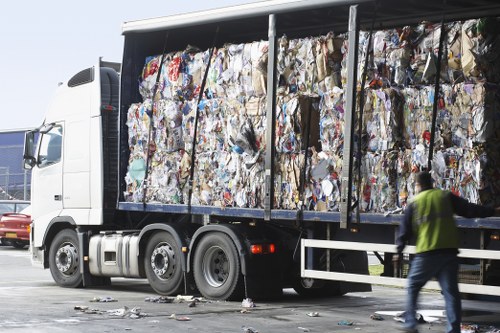
Office and retail clearance work often involves more than simple rubbish removal. Redundant desks, chairs, shelving, display units, archive boxes and broken fittings can accumulate in back rooms and storage areas, especially during reorganisations. We help remove these items in a way that supports the wider clearance, so the space can be returned to ordinary use without leaving scattered leftovers behind. Where needed, we can also take mixed waste linked to the same project.
Storage areas can become difficult to manage when items have been kept for too long, especially if stock, packaging and obsolete materials are mixed together. A sensible clearance usually begins with the largest or heaviest items and then moves through the remaining contents in a steady order. If your business is planning a change of layout, think in zones rather than in one huge pile; that makes it easier to work out what should stay, what can be re-used and what is ready for removal.
Further details of related removal work are set out on the office clearance page, which is useful when your commercial waste includes desks, filing, screens or general workplace contents. For items that are being moved on from the front of house, from stockrooms or from rented commercial units, a structured clearance can reduce disruption and keep the property usable. If the task is already clear in your mind, you can also ask for a quote using the same route as above.
Bulky items and fixed fittings
Commercial premises often need more than bagged waste collection. Heavy or awkward items such as cabinets, shelving, reception furniture, counters and worn equipment may need careful lifting and staged removal. Bulky waste can also include items that were once fixed in place and now need taking out as part of a refit or closure. The key point is that the removal plan should match the item type, access route and the condition of the surrounding area.
Where furniture or fixtures are being replaced, there may be a mixture of items suitable for direct disposal and items that can be separated for recycling. That depends on material type, condition and how much dismantling is required. Our approach is to make the process manageable rather than complicated. If you have a combination of large items and smaller waste, it usually helps to list them together in one enquiry so the load can be considered as a whole. One clear summary is usually enough.
Relevant linked services include furniture disposal for standalone items and furniture clearance where a larger set of furnishings needs removing together. When bulky waste forms part of a wider premises clear-out, those pages can help you describe the task more precisely. For a business planning a larger project, the practical step is to separate keep, remove and unsure categories before asking for a quotation.
Waste from fit-outs and workplace changes

Fit-outs, refurbishments and operational changes often generate a different kind of commercial waste from normal day-to-day rubbish. Packaging, old fixtures, dismantled furniture, loose materials and leftover fittings can all appear at once, which means the collection needs to be organised around access, timing and the type of material being cleared. A well-planned removal helps the project move forward without leaving the site cluttered.
Some premises need clearance at the start of a refit; others need it once new items have arrived and the unwanted material is ready to leave. Either way, the task works best when the waste is grouped logically. Keep heavy items apart from smaller loose material where possible, and make a note of any objects that need to be dismantled before removal. For mixed loads, it is often better to describe the main categories than to try to list every small component.
For mixed premises waste, waste removal gives a broad route when the load includes several types of non-hazardous material and you need a flexible service description. If the work relates specifically to business premises rather than domestic clearances, the wording there can help keep your enquiry accurate. When you are ready to move on, use a plain text CTA or ask directly for a quotation if the scope is already set.
Materials, sorting and responsible disposal
Commercial waste removal is easier to manage when the main material groups are recognised early. Cardboard, plastics, metals, timber, office furniture and electrical items may each need different handling, and that affects both the practical collection method and the disposal route. We can deal with many mixed loads, but the more clearly a business can identify the contents, the easier it is to match the work to the right process.
Some items are best kept separate because of material type or handling requirements. Others can travel together as part of a broader clearance. A useful rule is to identify what is bulky, what is light but numerous, and what might need special consideration because it is fragile, heavy or awkward. If your premises produce waste in more than one area—say, office and storage, or retail floor and back room—listing them together can be more helpful than sending separate short notes.
For material-specific disposal, fridge and appliance removal and mattress and sofa disposal can be relevant when business premises are clearing larger domestic-style items from managed accommodation or furnished spaces. On the other hand, if the load is mainly furniture, the furniture pages are likely to give a better description. Choose the page that best matches the main waste type and your enquiry will be easier to process.
Planning a clear and practical collection
Planning a collection is usually simpler than people expect, provided the essential details are gathered in one place. The most useful information is a description of the items, an estimate of the amount, and any access points that affect loading. Photographs can help, but they are not the only way to explain the work. A concise note about the room, the quantity and the nature of the waste is often enough to start the conversation.
It also helps to decide whether the job is a single pickup or part of a phased clearance. A business that is emptying one room may only need a one-off removal, while a site with multiple areas may need the work split into stages. If you already know that some items will remain in place, say so clearly. That makes it easier to avoid confusion and helps keep the collection focused on the material that is definitely going.
For booking and quotation details, the book online page provides a direct route when you want to submit the basic information in one place. If you prefer to understand the factors that shape cost before you proceed, pricing and quotes gives a useful starting point. Both pages are most helpful once you have a reasonable idea of the load and the access involved.
About Erith
Erith is a river town in the London Borough of Bexley, set on the south bank of the Thames in south-east London. Its history stretches back to medieval references, but the modern place is shaped just as strongly by the river edge, later industrial growth and large-scale regeneration. The Thames foreshore, riverside paths and the reach around Erith Pier give the area a distinct waterfront character, while the town centre sits slightly inland around the main streets and transport links. The pier itself, rebuilt in the early 1990s on the line of earlier structures, is a notable landmark and one of the longest publicly accessible piers on the Thames. Nearby, the riverside open space and footpaths provide broad views across the water toward the Kent side and the developing estuary landscape. Erith also contains older and newer layers of building, from historic public houses and town-centre structures to later housing estates and commercial premises. Much of the local story is tied to transport and industry: the arrival of rail connections, the growth of manufacturing and wharf activity, and the gradual shift toward mixed residential and commercial use. Today the area’s identity is still influenced by that river setting, with the shoreline, local parks and town-centre streets creating a compact but varied urban landscape. It is a place where the Thames remains central to the geography, the economy of the past and the visual character of the present.
Industrial and trade-related waste

Trade and light industrial premises often generate awkward waste streams that are different from ordinary office rubbish. Offcuts, damaged stock, empty packaging, broken fittings and redundant equipment may all need removal together. Some of these items are straightforward to load, while others require care because of weight, shape or the space they occupy. The right removal service keeps the task practical and avoids leaving loose ends behind after the main work is complete.
For this type of job, it is helpful to know whether the load includes mainly general waste or a mixture of general waste and reusable materials. If the waste is spread across a workshop, yard or storage space, a brief description of each area can make the arrangement more accurate. It is also sensible to mention whether items are stacked, boxed or already gathered in one place. That small detail can change the loading approach more than many people expect.
If your premises need wider support beyond a single load, builders waste clearance is relevant when the material comes from work carried out on the property itself, while garage clearance can be useful for business-owned or managed storage areas that have become overcrowded. These pages help distinguish between similar types of clearance work, especially when the material includes timber, packaging and oddments from ongoing projects. When in doubt, describe the waste plainly and let the collection be shaped around what is actually there.
Special cases and safer handling
Some waste items need a more careful conversation before collection. Not everything in a business setting belongs in a standard mixed load, and some materials may require a different route or a separate decision. When you are unsure about an item, it is better to identify it early than to leave it out of the description. That helps avoid confusion and gives a clearer picture of what can be taken as part of the same service.
Occasionally, premises hold items that are no longer useful but are not quite ordinary refuse. Old appliances, unusual fittings or contents from a specific room may need checking before removal. The most practical approach is to say what the item is, where it is located and whether it is part of a wider clearance. If anything is difficult to move or has to be separated from other waste, mention that as well. Accuracy is more valuable than length in a first enquiry.
Where a site has more specialised needs, the following pages can be relevant: hazardous waste disposal for materials that require particular handling, and insurance and safety for background on safe working practice. Those pages do not change the nature of the load, but they can help you decide how to describe it and what information to include. If a job involves mixed items, keep the description focused on the waste itself rather than on the room it came from.
Choosing the right clearance route

Choosing the right route for commercial waste removal in Erith is usually a matter of matching the load to the simplest suitable service description. A single bulky item, a room of office contents, a stockroom clear-out and a general mixed load all sound similar at first, but they are easier to handle when described clearly. The better the description, the easier it is to organise collection and disposal without unnecessary back-and-forth.
Where the main concern is to remove items quickly from an occupied business, keep the note brief but specific: what is going, where it is, and whether there are any access points that matter. Where the task is part of a larger change—such as relocation, refurbishment or storage reduction—say that too, because it helps place the collection in the right context. That context can matter more than the exact count of items. What matters most is a clear, workable summary.
If you are ready to arrange a collection, use plain text or the quotation page and give the main details in one message. You can also review contact us if you want to send your request through a direct enquiry route. For the final step, request a quotation and include the waste type, quantity and access information so the response can be as useful as possible.