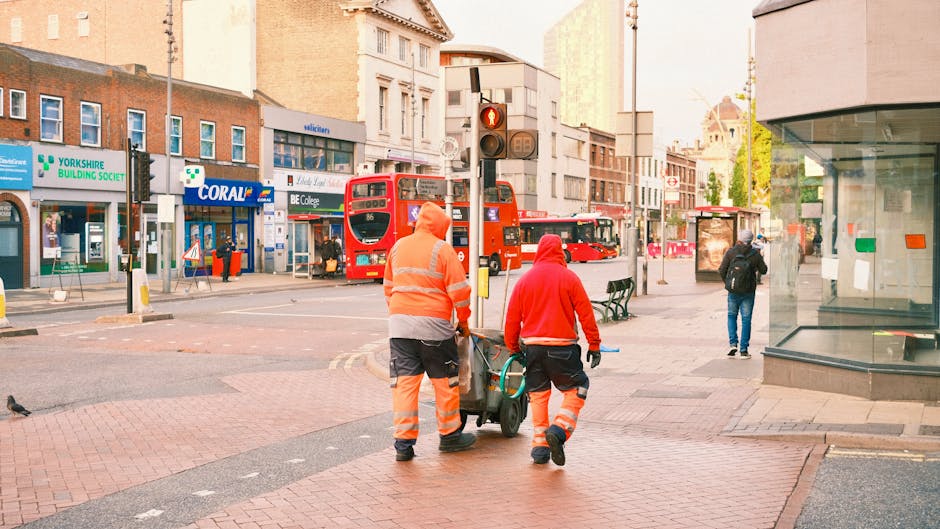
Erith High Street shop rubbish removal services: a practical guide for busy retailers
If you run a shop on or near Erith High Street, rubbish has a way of appearing faster than you can clear it. Cardboard behind the till, broken display fittings, old stock, packaging wrap, damaged shelving, a fridge that has finally given up on a hot afternoon - it all adds up. That is where Erith High Street shop rubbish removal services become less of a nice-to-have and more of a proper working solution. This guide explains how it works, who needs it, what to expect, and how to avoid the small mistakes that cause bigger headaches later on.
Whether you manage a small independent shop, a convenience store, a salon with retail space, or a unit that changes hands often, the aim is the same: keep the place safe, tidy, open for trade, and free from the sort of waste that eats up time and confidence. Truth be told, nobody wants to wrestle with a pile of rubbish at closing time.
Table of Contents
- Why Erith High Street shop rubbish removal services Matters
- How Erith High Street shop rubbish removal services Works
- Key Benefits and Practical Advantages
- Who This Is For and When It Makes Sense
- Step-by-Step Guidance
- Expert Tips for Better Results
- Common Mistakes to Avoid
- Tools, Resources and Recommendations
- Law, Compliance, Standards, or Best Practice
- Options, Methods, or Comparison Table
- Case Study or Real-World Example
- Practical Checklist
- Conclusion
- Frequently Asked Questions
Why Erith High Street shop rubbish removal services Matters
Retail waste is not just about looks, although a clean frontage certainly helps. In a busy high street setting, rubbish can affect everything from customer perception to staff safety and daily operations. A shop entrance blocked by bags, a delivery bay cluttered with old packaging, or a back room stuffed with broken fixtures can quickly become a nuisance. And once it starts to get messy, it tends to snowball.
On Erith High Street, where footfall, deliveries, and limited storage space can all compete with each other, waste has to be handled with a bit of discipline. That means knowing what needs to go, how fast it needs to leave, and whether any items need special handling. A one-off clear-out after a refit is one thing. Ongoing commercial waste management is another. Both matter.
There is also a reputational side to this. Customers notice overflowing sacks, strewn packaging, and old shop fittings leaning against the wall outside. Staff notice too. A cleaner workspace tends to feel calmer, and calmer tends to work better. Not magic, just reality.
For businesses that generate mixed waste, it is worth understanding the difference between general rubbish removal and broader waste removal support. Retail premises often need a blend of regular collection, ad hoc clearances, and specialist disposal for larger or awkward items.
How Erith High Street shop rubbish removal services Works
Most shop rubbish removal jobs follow a simple pattern, though the details depend on the size of the premises and the type of waste involved. Usually, you begin with a quick assessment of what needs collecting. That might be loose black bags, cardboard, broken fixtures, old promotional material, damaged stock, or larger items like counters and shelving.
From there, a team can plan the load, decide what vehicles or labour are needed, and arrange a collection time that suits your trading hours. For a high street shop, timing matters. Nobody wants waste collection to clash with the morning rush, a delivery window, or a customer event. A short visit before opening or after closing can make life much easier.
In practical terms, a good service should handle lifting, loading, and responsible disposal. You should not have to act like the loading bay manager, warehouse porter, and rubbish marshal all at once. That is the point of using a professional service.
If your clear-out includes furniture, fixtures, or fit-out debris, some items may be better routed through dedicated services such as furniture disposal or builders waste clearance. That becomes especially useful after refurbishments, maintenance works, or a change of tenancy.
For anything sensitive, such as paper records or old customer documents, businesses may also consider confidential shredding. It is a small detail, but one that can matter a great deal if paperwork is mixed in with general waste.
Key Benefits and Practical Advantages
The most obvious benefit is space. A clutter-free stockroom, rear yard, or back office makes everything easier. Staff can move around properly, stock can be handled safely, and you are not wasting time navigating around piles of packaging. Simple, but huge.
There is also time savings. Instead of asking staff to make repeated trips to local disposal points or trying to cram waste into unsuitable bins, a dedicated collection handles the lot in one go. That frees your team to do the work that actually earns money.
Another advantage is flexibility. Retail waste is rarely neat and predictable. One week it is cardboard and shrink wrap. Next week it is broken display units, a damaged fridge, old signage, or a pile of end-of-line stock that cannot be resold. A flexible service is much better suited to that sort of mixed demand than a fixed, one-size-fits-all approach.
There is a hygiene and presentation benefit too. Shops with food, beauty products, or customer-facing displays need to be especially careful. Waste left to build up can attract smells, pests, or just the wrong impression. Let's face it, customers do not love walking past a heap of soggy packaging in the rain.
Finally, there is peace of mind. When you work with a provider that understands safety, loading, and disposal responsibilities, the whole process feels steadier. If you want to compare how different disposal routes work, it can help to look at pricing and quotes alongside recycling and sustainability, because the cheapest option is not always the most sensible one in the long run.
Who This Is For and When It Makes Sense
Erith High Street shop rubbish removal services are useful for many different businesses, not just large retailers. In fact, some of the most common users are small and medium-sized shops that simply do not have room for waste to linger.
- Independent retailers with limited storage space
- Convenience stores and mini-markets
- Barbers, salons, and beauty businesses with retail stock
- Cafes, takeaway units, and food businesses with mixed waste
- Pop-up shops and short-term tenants
- Unit managers preparing for a refit or change of occupancy
- Business owners clearing out old stock or damaged items
It makes sense whenever waste becomes awkward, bulky, time-consuming, or simply too much for your normal bin arrangement. If you have ever stood in a back room thinking, "Right, where is all this going?", you already know the moment. That moment usually means it is time to call in help.
It is also worth considering a specialist option if you are dealing with items that are hard to move safely. For example, old display fridges, heavy shelving, broken shop furniture, or worn-out mattresses from a mixed retail and hospitality site may be better handled through targeted services such as fridge and appliance removal or mattress and sofa disposal.
Step-by-Step Guidance
If you have never arranged shop waste clearance before, the process is more straightforward than it may look. Here is a practical way to think about it.
- List the waste clearly. Separate loose rubbish, cardboard, broken fittings, furniture, electrical items, and any potentially hazardous material.
- Estimate the volume. You do not need to be perfect. A rough idea of how many bags, boxes, or bulky items are involved is usually enough to start.
- Check access. Note loading doors, narrow entrances, stairways, parking limits, and any time restrictions on the street.
- Identify special items. Fridges, chemicals, sharps, fluorescent tubes, paint, and cleaning products may need separate handling.
- Choose the right timing. Early morning, late evening, or a quiet trading window can reduce disruption.
- Confirm the collection plan. Make sure the team knows what is being removed and whether any items need to stay.
- Prepare the space. Move customers' stock or valuable items away from the collection area before the team arrives.
- Review the clearance after the job. Check that the shop floor, stockroom, or rear area is left as expected.
A useful rule of thumb: the better you sort the waste before collection, the smoother the job will be. Even ten minutes of preparation can save a surprising amount of time on the day. Small effort, big difference.
If you are managing a larger commercial clean-up, you might also want to look at business waste removal for ongoing support and office clearance if the premises include admin rooms, staff areas, or storage offices.
Expert Tips for Better Results
After plenty of day-to-day clearances, a few habits make a real difference.
- Keep cardboard separate where you can. It is easier to handle and often less messy than mixed waste.
- Do not bury awkward items. A hidden broken shelf or heavy unit can complicate loading and slow everything down.
- Label anything uncertain. If something might be hazardous, say so upfront. Better to pause and check than guess wrong.
- Book before the problem grows. An overflowing stockroom on a Friday afternoon is never ideal.
- Match the service to the job. Bulk items, builders' debris, and general shop waste are not always the same thing.
One little thing that often gets overlooked is access discipline. If the rear lane is blocked by stock cages, parked vehicles, or delivery pallets, a clearance can take twice as long. The job itself may be quick; the path to the waste is what eats the time.
Another good move is to think about sustainability early. If some items can be reused, repaired, or separated for recycling, that helps reduce what ends up as residual waste. The team page on recycling and sustainability is a useful reference point if you are trying to build better habits rather than just clear a one-off mess.
And, to be fair, if you are unsure whether an item is okay to go in a mixed load, ask before the collection. It is a lot easier than untangling it later.
Common Mistakes to Avoid
A few avoidable errors show up again and again in shop waste removals. They are not dramatic, but they can cause delay, extra cost, or compliance issues.
- Leaving the sorting too late. If everything is mixed into one pile, the load is harder to assess.
- Forgetting about hazardous items. Cleaning chemicals, aerosols, batteries, and certain electrical components may need special treatment.
- Assuming every item is standard rubbish. Broken fridges, old tills, and other electricals can be more involved than they first appear.
- Not checking building access. A perfectly planned collection can still go sideways if the delivery bay is blocked.
- Choosing a service without thinking through the waste type. A shop refit is often better served by a combined approach than a single collection method.
One very practical mistake is underestimating how much rubbish a shop generates during a refit or seasonal reset. The first few bags look manageable. Then the shelf units come down, the old stock comes out, and suddenly the back room looks like a small warehouse has exploded. Happens all the time.
If your waste includes leftover fittings from a shop redesign, the more appropriate route may be builders waste clearance. That is especially useful when plasterboard, timber, packaging, and broken fixtures are all mixed together.
Tools, Resources and Recommendations
You do not need a complicated toolkit to manage shop rubbish well. In most cases, the right setup is fairly simple.
| Need | Useful approach | Why it helps |
|---|---|---|
| General shop rubbish | Bag and separate by type where possible | Makes loading quicker and cleaner |
| Bulky fixtures | Measure access and identify lifting points | Reduces damage and avoids surprises on the day |
| Electrical items | Flag them early for special handling | Supports safe, compliant disposal |
| Ongoing waste | Set a repeat collection rhythm | Prevents buildup in stockrooms and back-of-house areas |
| Sorting and planning | Use a simple room-by-room or zone-by-zone list | Stops waste being overlooked in hidden corners |
For businesses comparing methods, it can help to read about what can go in a skip, even if you do not plan to use a skip directly. It gives a practical sense of what counts as mixed waste, what needs caution, and what is usually better separated.
Some shop owners also benefit from a broader clearance plan that includes storage rooms, lofts, or garages behind the premises. In those cases, garage clearance, loft clearance, or home clearance can sometimes support the same clean-up project if the property arrangement is mixed-use.
Law, Compliance, Standards, or Best Practice
Any shop waste removal in the UK should be handled with care, especially when the waste is commercial rather than household. You do not need to become a legal expert, but you do need to avoid casual disposal habits. Businesses have a duty to make reasonable checks that their waste is managed properly. In plain English: do not hand over rubbish to someone who cannot show they are operating responsibly.
Best practice usually includes keeping waste separated where practical, identifying anything hazardous, and using a provider that can explain how materials are handled. If your waste includes items that may be unsafe, such as chemicals, certain electrical equipment, or contaminated material, that should be flagged before collection. No surprises on site - that is the goal.
Insurance and safe working practices matter too. A good provider should be able to talk sensibly about lifting, loading, vehicle safety, and public-facing work in busy areas. On a high street, that matters because staff, customers, and pedestrians are often moving nearby. A tidy, controlled collection is simply better practice.
It can also help to look at a provider's published policies, not because you expect to read them like a thriller on a Sunday morning, but because they tell you something about how the business operates. Useful pages include health and safety policy, insurance and safety, and payment and security.
If a business handles sensitive data or employee documents, it is sensible to keep those items out of general waste streams and use a dedicated confidential disposal route. That is not over-cautious. It is just good sense.
Options, Methods, or Comparison Table
For shop rubbish, there are usually three practical ways to deal with the problem: let it build up until bin day, use your own transport, or arrange a professional clearance. They are not equal. Not even close, really.
| Method | Best for | Pros | Trade-offs |
|---|---|---|---|
| Normal bin collections | Small everyday waste | Simple and familiar | Limited capacity, not ideal for bulky items |
| Self-haul to a disposal site | Very small clear-outs | Can work for tiny loads if you have transport | Takes staff time, can be awkward, and may not suit mixed waste |
| Professional shop rubbish removal | Busy shops, bulky waste, mixed loads | Fast, flexible, and less disruptive | Needs booking and clear communication |
In a high street setting, the professional route usually wins because it protects your time and keeps disruption low. If your premises are part of a wider commercial unit, it may also be worth considering office clearance or house clearance depending on the property mix and what needs removing.
There is no need to make the process more complicated than it needs to be. The right option is the one that clears the space safely, quickly, and without turning your workday upside down.
Case Study or Real-World Example
Here is a realistic example. A small shop on Erith High Street is preparing for a refresh before a new seasonal range lands. The back room is full of old point-of-sale displays, flattened cardboard, a broken shelf unit, a few damaged stock items, and a heavy appliance that no longer chills properly. Staff have been working around it for weeks because, well, there was always something more urgent.
Rather than trying to move everything in stages, the manager books a clearance for early morning. The waste is grouped into a few simple piles the day before: cardboard, bulky fixtures, electrical items, and general rubbish. Access to the rear is checked, the delivery route is kept clear, and the team can get in and out without interfering with opening hours.
The result is not dramatic, but it is noticeable. The stockroom feels bigger. Staff are not sidestepping boxes every five minutes. The new display units can go up cleanly. And the shop front looks better because the clutter at the back is gone. That kind of change can lift the whole feel of a business, even if customers never see the full before-and-after.
That is the real value of good shop rubbish removal: less friction, fewer delays, and a space that feels workable again. Small win? Sure. But those small wins stack up.
Practical Checklist
Use this quick checklist before booking Erith High Street shop rubbish removal services:
- Identify all waste types, including bulky items and electricals
- Separate anything confidential, hazardous, or sensitive
- Estimate the number of bags, boxes, or larger items
- Check access, parking, and any time restrictions
- Decide whether the job is a one-off clearance or ongoing support
- Move stock and valuables away from the collection area
- Confirm which items should stay on site
- Ask about recycling, disposal, and any special handling needs
- Schedule the collection for a quieter trading window if possible
- Review the cleared area once the work is finished
Keeping this list handy saves a lot of back-and-forth. A little planning at the start, and suddenly the whole thing feels much easier. Funny how that works.
Get a free quote today and see how much you can save.
Conclusion
Erith High Street shop rubbish removal services are about more than clearing a pile of waste. They help shops stay safe, presentable, and ready for business. They also reduce stress. That might sound like a soft benefit, but in a busy retail setting, less stress is a serious operational advantage.
If you are dealing with routine waste, a refit, old fixtures, mixed rubbish, or awkward items that no one wants to move by hand, the sensible approach is to plan the clearance properly and choose a method that fits the job. Keep it simple where possible, be clear about the waste, and do not leave the mess until it becomes a bigger mess. Happens fast, especially on a high street.
With the right support, you can get the space back, keep standards up, and let the shop feel like itself again. And honestly, that fresh-start feeling is hard to beat.
Frequently Asked Questions
What are Erith High Street shop rubbish removal services used for?
They are used to clear out retail waste such as packaging, broken fixtures, old stock, shelving, display items, and other rubbish that builds up in a shop. They are especially useful when the waste is too bulky or too much for normal bins.
Can shop rubbish removal handle mixed waste?
Yes, in many cases it can. Mixed loads are common in shops, especially after refits or stock resets. That said, hazardous or specialist items should be identified separately so they can be handled correctly.
Do I need to sort the waste before collection?
Sorting is not always required, but it helps. Separating cardboard, general rubbish, bulky fixtures, and electricals makes the collection faster and can reduce confusion on the day.
What happens to old shop furniture and fittings?
Depending on the item, it may be reused, recycled, or disposed of responsibly. Larger fittings often need careful removal, and some are better handled through dedicated furniture disposal or builders' clearance routes.
Can electrical shop items be removed too?
Yes, many electrical items can be removed, including fridges and display appliances. They may need specialist handling, so it is best to mention them in advance rather than leaving them as a surprise.
How do I know if an item is hazardous?
If it contains chemicals, pressurised contents, batteries, or potentially contaminated material, it may need special treatment. If you are unsure, do not guess. Ask before collection so the item is assessed properly.
Is shop rubbish removal suitable for small independent stores?
Absolutely. In fact, smaller shops often benefit the most because storage is tighter and staff time is precious. A quick clearance can make a surprisingly big difference to the daily feel of the shop.
Can the collection be arranged outside trading hours?
Often, yes. Early morning or after closing is commonly the easiest option for high street shops because it reduces disruption and keeps customers out of the way.
How often should a shop book rubbish removal?
That depends on the type of business and how much waste it generates. Some shops need occasional one-off clearances, while busier or more space-limited premises benefit from more regular collections.
What should I check before booking a clearance?
Check access, waste type, item size, timing, and whether any items require special handling. It also helps to know if you need help with ongoing business waste rather than just a single removal.
How can I keep shop waste under control day to day?
Use labelled waste areas, separate cardboard where possible, clear bulky items quickly, and avoid letting broken stock or old displays linger. Small routines prevent the stockroom from becoming a catch-all.
Why choose a professional service instead of handling waste ourselves?
A professional service saves staff time, handles lifting and loading, and helps reduce the risk of injury or disposal mistakes. For a busy Erith High Street shop, that tends to be the cleaner, calmer option.